Why Low Power LED Improves Safety in Auxiliary Lighting


Low power led technology enhances safety in auxiliary lighting by delivering reliable illumination while reducing risks common in older systems. In safety-critical spaces, you depend on lighting that minimizes hazards. Traditional bulbs often create issues such as poor lighting, excessive heat, and delayed startup. The table below highlights common risks with older auxiliary lighting:
Safety Risk | Description |
|---|---|
Inadequate Lighting | Poor visibility increases slip, trip, and fall accidents. |
Fragility of Bulbs | Broken bulbs may expose you to hazardous materials. |
Maintenance Hazards | Frequent bulb changes raise the risk of injury from falls or dropped tools. |
You can address these challenges with modern LED solutions, which provide safer and more dependable performance.
Key Takeaways
Low power LEDs provide reliable illumination, reducing risks associated with traditional lighting like poor visibility and excessive heat.
LEDs generate less heat, minimizing fire hazards and burns, making them safer for use in critical environments.
With a lifespan of 25,000 to 50,000 hours, LEDs require fewer replacements, lowering maintenance costs and risks during bulb changes.
LED lighting is energy-efficient, using up to 90% less energy than traditional bulbs, which lowers electricity bills and environmental impact.
LEDs meet strict safety standards, ensuring compliance and enhancing safety in emergency situations.
Low Power LED Safety Benefits
Reliable and Efficient Illumination
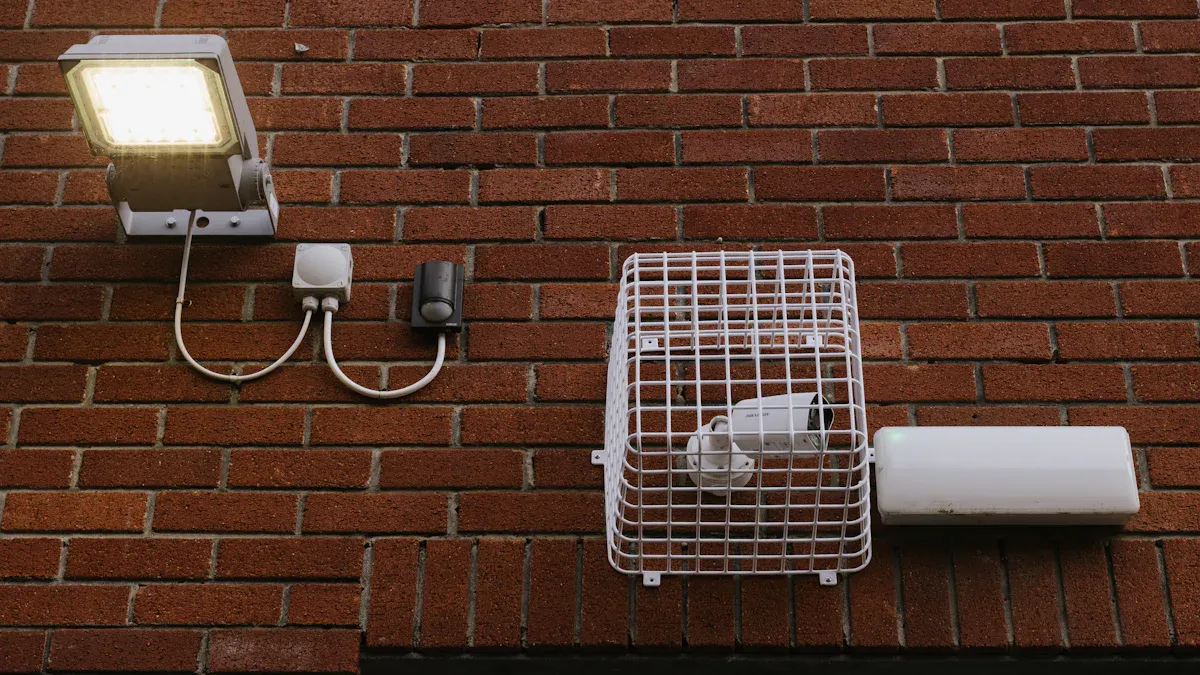
You need lighting that performs consistently, especially in critical situations. Low power led technology delivers reliable and efficient illumination in auxiliary lighting systems. When you choose led bulbs, you benefit from several important advantages:
High luminous efficacy allows you to get more visible light from less electricity, which means less wasted energy.
Led bulbs last much longer than traditional options, so you spend less time and money on replacements.
You can often use fewer led bulbs to achieve the same brightness, which lowers installation and maintenance costs.
These lights use less energy, which helps protect the environment and reduces your carbon footprint. Led bulbs also contain no hazardous materials like mercury.
With these features, you can trust low power led systems to provide steady, bright light when you need it most.
Low Heat and Fire Risk
Safety remains a top priority in any auxiliary lighting setup. Low power led bulbs generate much less heat than traditional lighting sources. This cooler operation greatly reduces the risk of burns and fire hazards. Incandescent bulbs can reach high temperatures and may ignite nearby flammable materials. In contrast, led bulbs keep your environment safer for everyone.
You should also consider the impact of heat in enclosed fixtures. Low power led lights produce less heat, but they can still be sensitive to heat buildup. If heat becomes trapped, it may affect performance and shorten the lifespan of your lighting. Advanced thermal management in modern led bulbs helps maintain safe operating temperatures, even in tight spaces.
Tip: Always check that your fixtures allow for proper airflow to maximize the safety and longevity of your low power led lighting.
Long Lifespan and Durability
When you install auxiliary lighting, you want it to last. Low power led bulbs offer a much longer lifespan than traditional lighting technologies. The table below shows how they compare:
Lighting Technology | Average Lifespan (hours) |
|---|---|
Low Power LEDs | 25,000 - 50,000 |
Incandescent Bulbs | 1,000 |
Halogen Bulbs | 2,000 |
You can see that low power led bulbs outlast other options by a wide margin. This durability means fewer replacements, less maintenance, and lower risk of injury from changing bulbs in hard-to-reach places. You also save money and reduce waste, making low power led lighting a smart and sustainable choice for any auxiliary system.
Auxiliary Lighting and Safety
What Is Auxiliary Lighting?
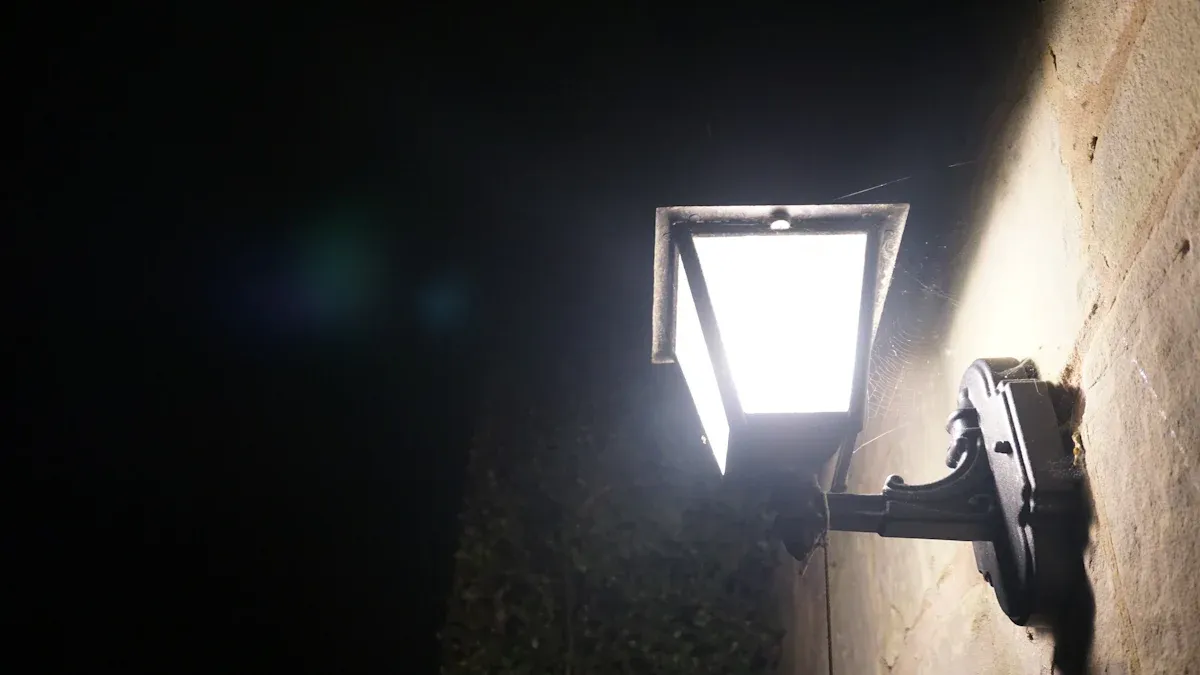
You rely on auxiliary lighting to maintain visibility when the main lighting system fails or when extra illumination is needed. This type of lighting plays a vital role in safety-critical environments, including hospitals, industrial facilities, and transportation hubs. Building codes and safety standards define auxiliary lighting requirements to ensure safe operation. For example, regulations such as 1910.178(h)(2) require auxiliary directional lighting on trucks when general lighting falls below 2 lumens per square foot.
Regulation | Description |
|---|---|
1910.178(h)(2) | Auxiliary directional lighting must be provided on trucks when general lighting is below 2 lumens per square foot. |
Auxiliary lighting supports emergency situations, backup power scenarios, and multi-mode operations. You see its importance in areas where continuous illumination is necessary for safety and productivity.
Safety Needs in Auxiliary Systems
You must consider several safety needs when designing or maintaining auxiliary lighting systems. Effective lighting in hospitals impacts visibility, safety, and the emotional well-being of patients and staff. Proper illumination improves the experience for everyone in healthcare facilities. In industrial and transportation settings, auxiliary lighting helps prevent accidents and supports safe movement.
Enhances visibility to prevent accidents.
Ensures uniform illumination to eliminate shadows and dark spots.
Provides task-specific lighting for different work requirements.
Regulatory agencies set strict standards for emergency and auxiliary lighting. UL 924 requires rigorous testing to confirm that emergency lighting works during critical situations. UL 924A certifies alternative emergency sign designs, ensuring compliance with safety standards. Other standards, such as UL 1994 and CSA C22.2 No. 141, address luminous egress path marking and emergency lighting equipment.
Note: You should always verify that your auxiliary lighting system meets current safety standards. Compliance protects people and property during emergencies.
LED Lighting vs. Traditional Options
Heat and Electrical Safety
You need to consider safety first when choosing auxiliary lighting. Traditional bulbs, such as incandescent and fluorescent, create several hazards. Incandescent bulbs convert most of their energy into heat, which increases the risk of burns and fire. Fluorescent bulbs generate less heat but still more than led lighting. Led lighting produces very little heat, making your environment safer and reducing the chance of fire.
You also avoid hazardous materials with led lighting. Fluorescent bulbs contain mercury, which can be dangerous if the bulb breaks. Led lighting does not use hazardous materials, so you protect people and property. Electrical safety improves with led lighting as well. Traditional lighting can expose you to high voltages and shock hazards. Led lighting uses grounding systems and circuit protection to keep you safe.
Hazard Type | Description |
|---|---|
Electric Shock | Traditional lighting can expose users to voltages exceeding 120V AC due to faulty installations. |
High-Voltage Components | Exposed metal heat sinks and improper installations can create shock hazards. |
Mitigation through LEDs | LEDs utilize grounding systems and circuit protection mechanisms to enhance safety. |
Safety Features | Integrated grounding connectors and electrostatic discharge protection circuits are employed. |
Energy Efficiency and Backup Time
Led lighting stands out for its high efficiency and energy efficiency. You use over 75% less energy with led lighting compared to incandescent bulbs. For example, a 10-watt led bulb can provide the same brightness as a 60-watt incandescent bulb. Led lighting fixtures can reduce energy consumption by 40% to 90% in emergency lighting applications.
Led lighting is 85% to 90% more efficient than incandescent lamps.
Led lighting is 40% to 50% more efficient than fluorescent lamps.
Led lighting allows backup batteries to last longer during power outages, giving you more time to evacuate safely.
Led lighting reduces energy bills and environmental impact.
You benefit from longer backup times in emergencies because led lighting uses less power. This high efficiency ensures that your auxiliary lighting system remains reliable when you need it most.
Maintenance and Reliability
Led lighting offers significant advantages in maintenance and reliability. You spend less time and money replacing bulbs because led lighting lasts much longer than traditional options. Led lighting requires minimal maintenance, which lowers labor costs and reduces the risk of accidents during bulb changes.
Led lighting has lower maintenance costs than traditional lighting.
Led lighting lasts longer, so you replace bulbs less often.
Led lighting systems need some upkeep to maximize lifespan and performance.
Proactive maintenance improves safety and comfort in your environment.
Testing shows that led lighting performs well over time, even under challenging conditions. You can trust led lighting to deliver consistent illumination and cost-effectiveness in auxiliary applications. Led lighting provides high efficiency, reliability, and safety, making it the best choice for your needs.
LED Features for Multi-Mode Lighting
Dimmability and Switching
You need flexibility in auxiliary lighting systems to adapt to changing conditions. Low power LEDs excel in multi-mode applications, allowing you to switch between task lighting and ambient lighting with ease. You can adjust brightness levels to suit specific needs, whether you require focused task lighting for detailed work or softer ambient lighting for general visibility.
The LED driver maintains a constant current, which is essential for consistent brightness and color during mode changes.
You benefit from advanced regulators, such as linear, buck, boost, and buck-boost types, that optimize performance for both task lighting and ambient lighting.
The integral driver circuit matches incoming DC power to the LED’s requirements, including dimming control. This ensures you can transition smoothly between task lighting and ambient lighting without flicker or loss of performance.
Stable current and voltage regulation prevent issues when you switch modes, even if your vehicle or facility experiences voltage fluctuations.
Tip: Choose LED fixtures with built-in dimming and switching capabilities to maximize the versatility of your auxiliary lighting system.
You can rely on low power LEDs to deliver precise task lighting for critical operations and comfortable ambient lighting for general safety. This adaptability improves overall performance and ensures you meet the demands of any environment.
Stable Performance in Emergencies
You depend on auxiliary lighting to function reliably during emergencies. Low power LEDs provide stable performance when power sources fluctuate or fail. Constant-intensity LED indicators maintain brightness during voltage drops, so you always have clear visibility. The constant current source inside the LED system ensures that performance remains steady, even during power outages.
LED emergency lighting produces concentrated and even light, which enhances visibility and helps you avoid hazards.
You benefit from energy-efficient LEDs that convert about 80% of their energy into light, supporting longer operation during emergencies.
LEDs last over 25,000 hours, reducing the need for frequent replacements and ensuring reliable task lighting and ambient lighting when you need it most.
LED systems use less power than traditional bulbs, which extends backup battery life and lowers electricity costs.
Note: Reliable performance in emergencies means you can safely navigate spaces, find exits, and complete essential tasks without interruption.
You can trust low power LEDs to deliver dependable task lighting and ambient lighting in critical situations. Their stable performance and energy efficiency make them the preferred choice for auxiliary lighting in safety-critical environments.
Low power LEDs give you unmatched safety in auxiliary lighting. You avoid electric shock risks, reduce fire hazards, and improve visibility for everyone.
LEDs operate at low voltage, making them ideal for high-risk areas with moisture, children, or pets.
You meet strict safety standards, such as OSHA and NFPA 101, with reliable emergency lighting.
Real-world results show major energy savings and fewer accidents after switching to LEDs.
Choose low power LEDs for safer, more reliable auxiliary lighting in every environment.
FAQ
What makes led technology safer for auxiliary lighting?
You gain safety with led technology because it operates at low voltage and produces minimal heat. Room led lights reduce fire risk and electric shock hazards. You also avoid hazardous materials. Led applications in emergency systems deliver reliable illumination and enhance safety for everyone.
How do room led lights contribute to energy savings?
Room led lights use less power than traditional bulbs. You see significant savings on energy bills. Led applications in homes and businesses lower electricity costs. Efficient led systems extend backup battery life, which increases savings during emergencies and reduces environmental impact.
Can you use led lighting in all auxiliary applications?
You can install led lighting in most auxiliary applications. Room led lights fit hospitals, industrial sites, and transportation hubs. Led systems adapt to multi-mode setups. You benefit from flexible led applications that meet strict safety standards and deliver consistent performance.
Why do led bulbs last longer than other lighting options?
Led bulbs use advanced technology that resists wear and tear. Room led lights have solid-state components. You replace bulbs less often, which means fewer maintenance tasks. Led applications offer long lifespans, reduce waste, and provide ongoing savings for your facility.
How do led features improve emergency lighting performance?
Led features like dimmability and stable current regulation help you maintain visibility during emergencies. Room led lights deliver consistent brightness. Led applications support longer backup times. You rely on led systems for dependable illumination and safety in critical situations.
See Also
Why Rechargeable Flashlights Enhance Community Safety Efforts
Advantages of Employing a Red Light Headlamp
Key Gear: Headlamps for Convenient Hands-Free Lighting
Comparing Police Flashlights and Standard Flashlights: A Guide