High-Lumen Search Lights Explained: What B2B Buyers Should Know Before Bulk Purchasing

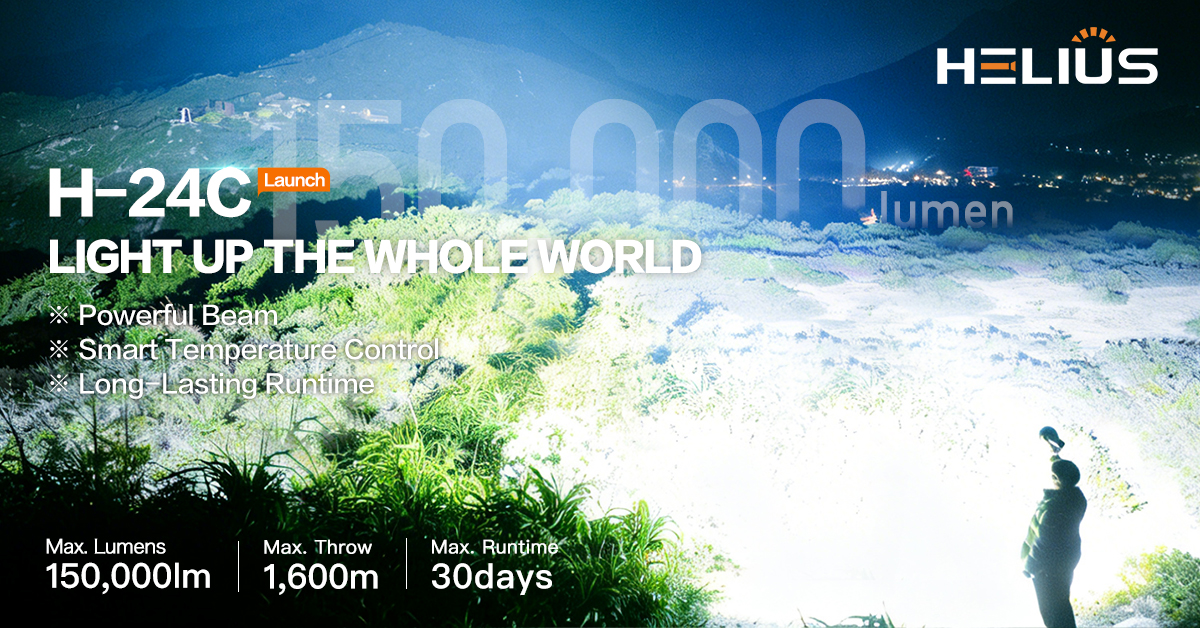
You face critical decisions when selecting a high lumens searchlight for your operations. Matching technical features to your requirements ensures efficiency and compliance. Consider these common factors shaping searchlight needs in B2B sectors:
North American buyers often seek innovative technology.
Regulatory frameworks drive safety and environmental compliance.
Premiumization and subscription models reflect changing expectations.
Key Takeaways
Understand lumens and brightness. Higher lumens mean brighter lights, essential for safety and visibility in industrial settings.
Check certifications before purchasing. Look for IP ratings, CE, RoHS, and UL certifications to ensure safety and compliance.
Evaluate battery life and power options. Choose rechargeable models for longer runtimes and lower environmental impact.
High Lumens Searchlight Basics
Defining High Lumens and Brightness
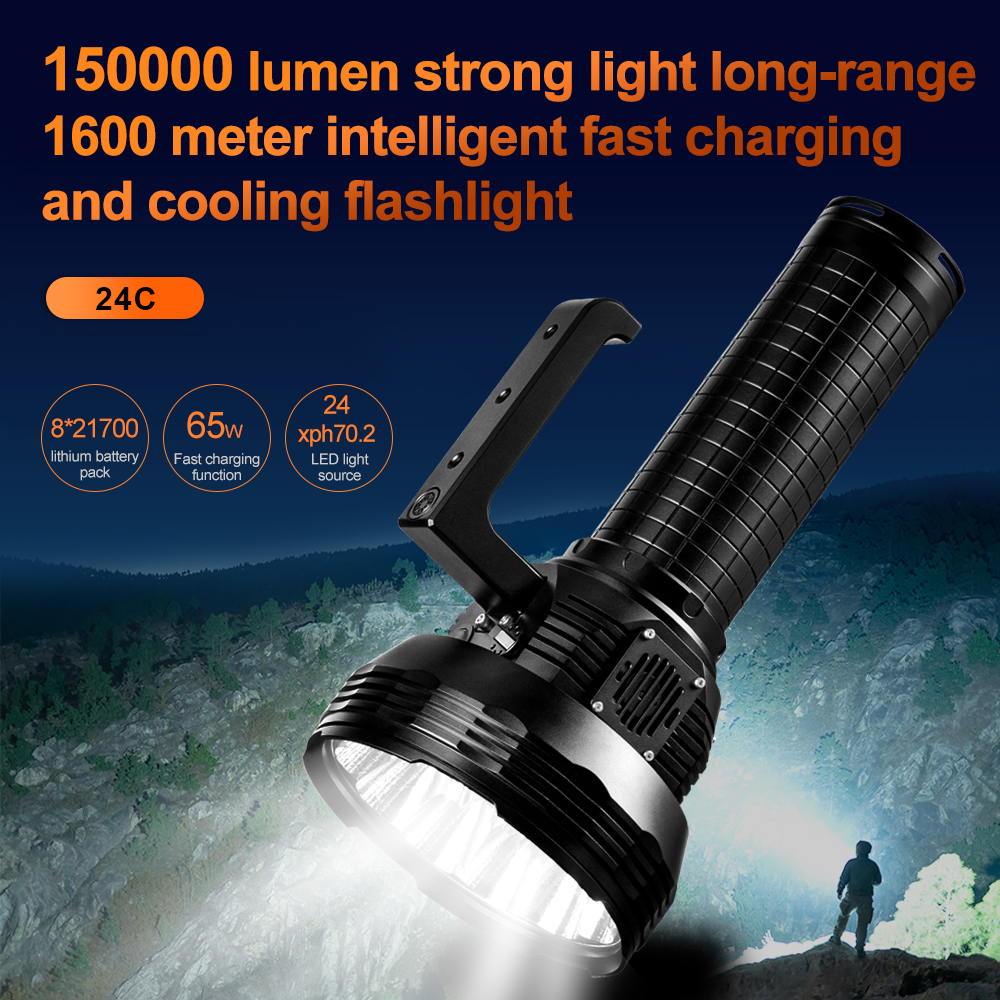
You need to understand what makes a high lumens searchlight stand out. Lumens measure the total amount of visible light a searchlight produces. Higher lumens mean brighter illumination, which is critical for industrial, emergency, or outdoor operations. When you compare premium lights to budget options, you see clear differences in performance:
Metric | Premium Lights | Budget Lights |
|---|---|---|
Detection Distance | Up to 1-2 miles | Up to 0.5-1 mile |
Side Visibility | Wider coverage angles | Limited coverage |
Penetration | Cuts through adverse conditions | Less effective |
A high lumens searchlight gives you long-range visibility and better coverage, especially in challenging environments.
Importance of Beam Distance and Candela
Beam distance tells you how far the searchlight can project its illumination. Candela measures the intensity of the light in a specific direction. You want a searchlight with high candela and a focused beam for outdoor or tactical use. For example:
The RCL-100 LED searchlight produces over 220,000 candelas.
It uses a 7-degree beam angle for maximum reach.
High candela and a narrow beam create effective long-range visibility.
If you need the best searchlight for search and rescue, look for models with adjustable beam focus to adapt to different tasks.
Color Temperature and Application Fit
Color temperature affects how you see and work under artificial light. You should choose the right range for your environment:
Color Temperature Range | Effect on Visibility and Safety |
|---|---|
4000K - 5000K | Promotes alertness, reduces drowsiness, improves visibility of labels and shelves |
Below 4000K | Can induce drowsiness, hinders visibility |
Color Temperature Range | Benefits for Industrial Settings |
|---|---|
4000K - 5000K | Mimics daylight, reduces eye strain, enhances detail for precision tasks |
A high lumens searchlight with the right color temperature improves safety, comfort, and productivity in your facility.
Key Features for B2B Buyers
Battery Life and Power Compatibility
You need reliable illumination for extended operations. Battery life stands as a critical factor when you select a high lumens searchlight for industrial or emergency use. Many high-quality led searchlight models now deliver up to 30 hours of continuous illumination on a single charge. This extended runtime ensures your teams can work through long shifts or emergencies without frequent recharging.
Feature | Specification |
|---|---|
High Lumen Output | Up to 10,000 lumens |
Long Battery Life | Up to 30 hours on a single charge |
Waterproof & Shockproof | IP68 rated for extreme conditions |
Power compatibility also matters. You must ensure that your searchlight meets the standards required for your region and application. Most B2B buyers look for products that comply with IP65 or higher, CE, RoHS, and FCC standards. For North American operations, UL certification is essential. These certifications guarantee safe and reliable performance in demanding environments.
Standard | Requirement |
|---|---|
IP Rating | Must meet IP65 or higher |
CE, RoHS, FCC | Compliant with these standards |
IEC 61032 | Certification for electrical safety |
UL Certification | Verify for North American use |
Tip: Always check for certification labels before bulk purchasing. This step helps you avoid compliance issues and ensures operational safety.
Heat Dissipation and Longevity
Continuous use generates significant heat in high-performance searchlights. You want a model that manages heat efficiently to maintain consistent illumination and extend operational life. Modern searchlights use high-efficiency led chips that produce bright light while consuming less power. Effective thermal management is crucial. Manufacturers use heat sinks made from high thermal conductivity materials like aluminum. Some models add active cooling systems when passive cooling cannot handle the heat load.
Optimized chip structures keep thermal resistance low.
Aluminum heat sinks maximize heat dissipation.
Active cooling systems support high-output models.
Proper heat dissipation protects internal components from damage. It also prevents performance drops and increases the lifespan of your equipment. The table below shows how heat management impacts durability and safety:
Aspect | Explanation |
|---|---|
Component Damage | Prolonged exposure to high temperatures can degrade critical components. |
Performance Degradation | Overheating can reduce light output and overall reliability. |
Increased Durability | Effective heat management prevents premature wear, extending lifespan. |
Operational Safety | Proper dissipation reduces risks of overheating and potential hazards. |
Note: Prioritize searchlights with advanced heat management if your teams operate in high-temperature or continuous-use scenarios.
Energy Efficiency and Design
You want to maximize illumination while minimizing energy consumption. Modern led technology achieves this goal. Today’s high lumens searchlight models are up to ten times more efficient than traditional incandescent options. This efficiency reduces energy costs and supports longer battery life.
Manufacturers now add smart features to improve usability and sustainability:
Adjustable beam focus lets you tailor illumination to each task.
Bluetooth connectivity enables remote control and monitoring.
Eco-friendly materials and improved production processes support sustainability goals.
A well-designed searchlight balances performance, durability, and environmental responsibility. You benefit from lower operating costs and a reduced carbon footprint.
Pro Tip: Choose models that combine energy-efficient led technology with smart features for the best long-term value.
Comparing High-Performance Searchlight Models
Handheld vs. Mounted Options
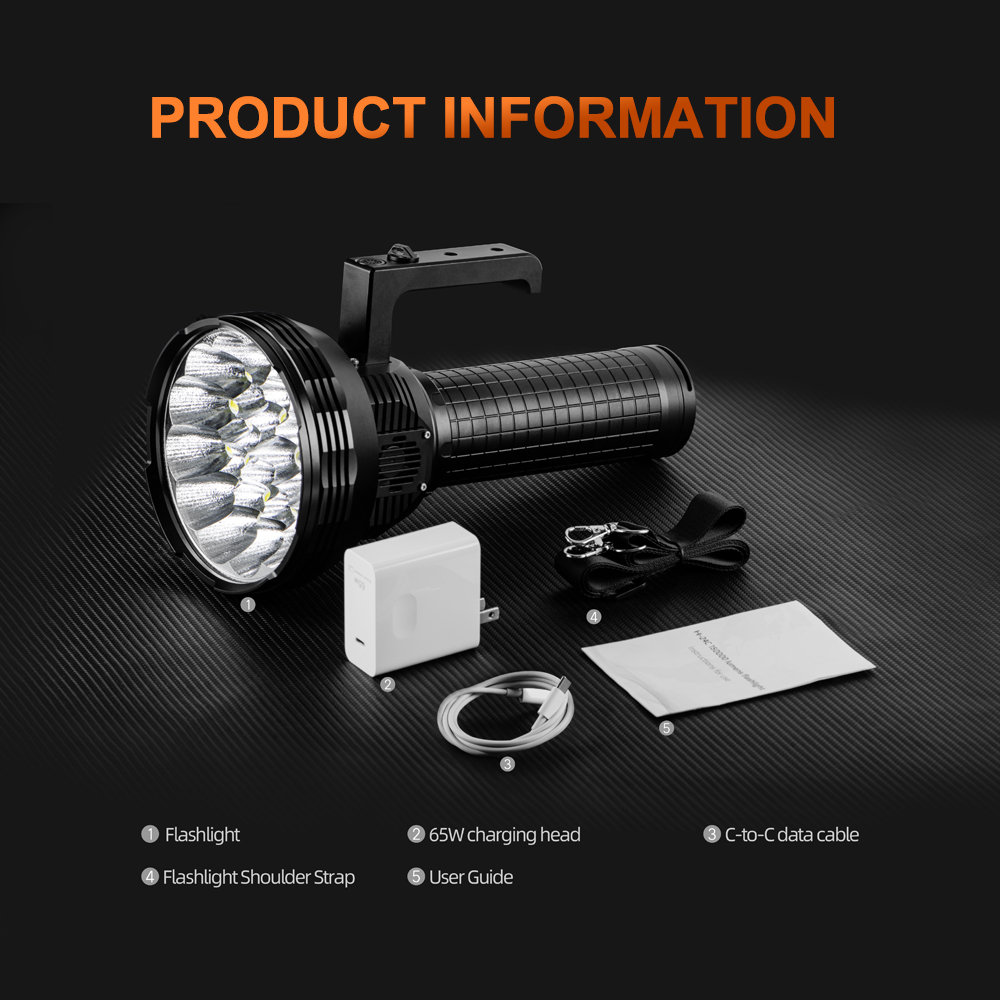
You need to choose between handheld and mounted models based on your operational environment. Handheld units offer portability and flexibility, making them ideal for mobile teams. Mounted models provide stability and long-range illumination, which suits fixed installations or vehicles. The table below highlights key differences:
Feature | Handheld Models | Mounted Models |
|---|---|---|
Power Source | Rechargeable batteries for portability | Hardwired to electrical system |
Mounting Style | Portable, versatile | Fixed installation for stability |
Beam Type | Focused for long-distance | Spot, flood, or combination |
Durability | Varies, often less rugged | Engineered for extreme conditions |
Range | Shorter than mounted models | Long-range, up to 1 mile |
Rechargeable vs. Disposable Power
You must consider power options for reliability and cost. Rechargeable batteries cost more upfront but save money over time and reduce waste. Disposable batteries offer convenience but require frequent replacement. The chart below compares estimated runtimes for different flashlight types:
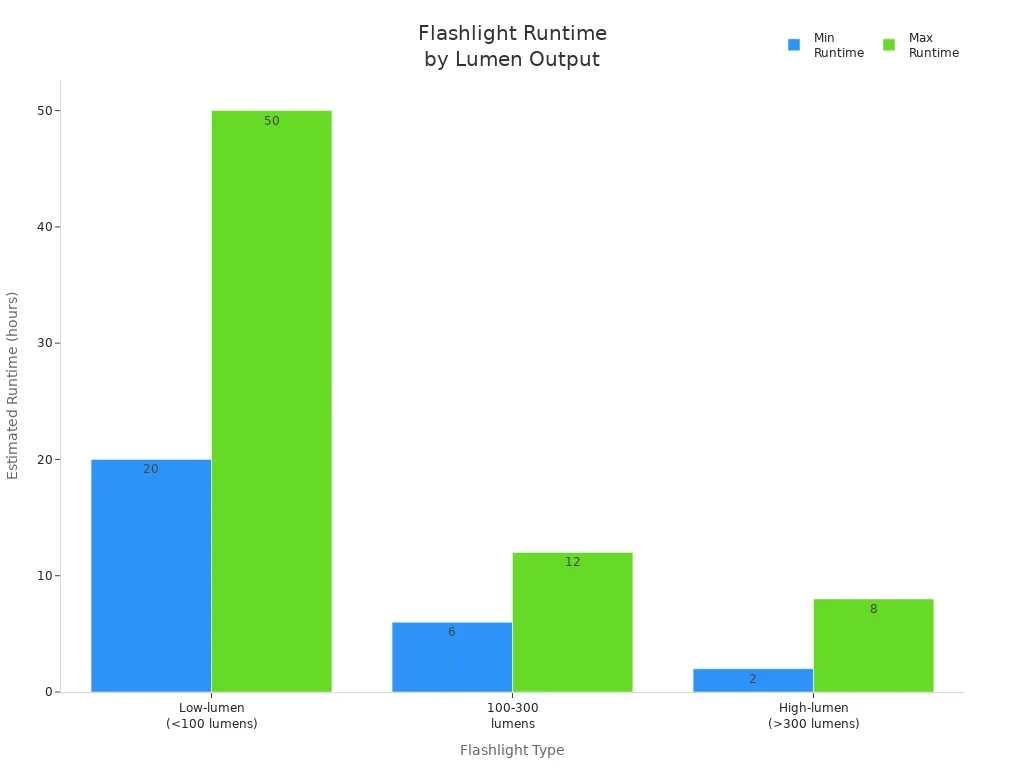
Rechargeable models also have a lower environmental impact and deliver longer runtimes, making them a smart choice for extended operations.
Strengths and Use Cases
You should match the right model to your application. For example, the Trio 550 provides automatic emergency illumination, while the Panther XHP-X offers a 1000-meter beam for search and rescue. The table below summarizes strengths and ideal uses:
Model | Key Features | Ideal For |
|---|---|---|
Trio 550 | 550 lumens, emergency illumination | Emergency, security, off-grid |
Panther XHP-X | 1000m beam, rugged build | High-visibility, search tasks |
SL1600 | 1600 lumens, adjustable handle | Extended missions, worksite lighting |
SL900 | 900 lumens, compact | Portable, professional applications |
Trigger-Pro | 1300 lumens, user-friendly | Search and rescue, outdoor activities |
You gain the most value by aligning your high-performance searchlight selection with your operational needs.
Selection Criteria for Bulk Purchasing
When you plan a bulk purchase of high-performance lighting, you need a clear set of criteria. These criteria help you match your operational needs, safety requirements, and compliance standards. You also want to balance cost, reliability, and the feature set to maximize value for your organization.
Assessing Lumen Output Needs
Start by evaluating the specific environments where you will deploy your lighting. You should determine the optimal high lumens output for each application. For example, warehouses and factories often require high lumens searchlight models or high lumen LED strips to ensure bright, uniform illumination across large spaces. You need to consider the total light output per meter and the thermal management solutions that support effective performance in these demanding settings. If you operate in areas with high ceilings or open layouts, you may need even greater illumination to avoid dark spots and maintain safety.
Tip: Always match the total light output to the size and complexity of your operational environment. This approach ensures you achieve both visibility and energy efficiency.
Prioritizing Essential Features
You must identify which features matter most for your business. B2B buyers often focus on product quality, compliance, and supplier capabilities. The table below highlights the most frequently prioritized features when selecting lighting for bulk orders:
Feature | Description |
|---|---|
Product Quality & Compliance | Compliance with international standards for safety, durability, and performance (e.g., IP67, LM80). |
Manufacturing Capabilities | Assessment of output capacity, defect rates, and quality control protocols. |
Supply Chain Resilience | Ability to maintain access to key components and manage disruptions effectively. |
Communication and Responsiveness | Fast response times and multilingual support to enhance collaboration efficiency. |
You should also consider the durability and adaptability of your lighting. Waterproofing stands out as a top priority for buyers who need equipment that can withstand harsh or wet environments. Smart controls add value by allowing you to adjust illumination levels, integrate with IoT systems, and monitor performance remotely. These extra functions can improve operational flexibility and reduce maintenance costs.
Waterproofing ensures durability in challenging conditions.
Smart controls support adaptability and integration with modern platforms.
Technological advancements like improved chipsets and addressable LEDs expand your options for customization.
Evaluating Certifications and Extra Functions
Certifications play a critical role in regulated industries such as mining, construction, and petrochemicals. You need to verify that your lighting meets the required standards for your sector. The table below outlines key equipment groups and their applications:
Equipment Group | Description | Applicable to | Example / Notes |
|---|---|---|---|
Equipment Group I | Equipment intended for underground mining operations where methane and coal dust are present. | Mining Industry | Lighting fixtures must be designed to prevent ignition of underground gas mixtures. |
Equipment Group II | Equipment intended for surface industries, including oil and gas, petrochemical, and manufacturing sectors. | Industrial Facilities | Explosion-proof lights for refineries, offshore platforms, and chemical plants. |
You should always check for certifications such as IP67, LM80, and other relevant marks. These certifications confirm that your lighting meets safety, durability, and performance standards. In addition, look for extra functions that align with your operational needs. Waterproofing and smart controls are highly valued in bulk purchases, especially for outdoor or mission-critical applications.
Note: The best searchlight for your business will combine high lumens output, robust certifications, and advanced features. This combination ensures reliable illumination and long-term value.
By setting clear selection criteria, you can confidently choose lighting solutions that deliver performance, compliance, and cost-effectiveness for your organization.
Ensuring Value and Reliability
Supplier Reputation and Warranty
You need to choose suppliers who demonstrate proven reliability and strong industry credentials. A reputable supplier gives you confidence in both product quality and after-sales support. When you evaluate potential partners, consider these criteria:
Criteria | Description |
|---|---|
Certifications and Compliance | Look for ISO 9001 and BSCI certifications, CE/UL certification, LM-79 reports, and IP65 ratings. |
Technical Capabilities and Innovation | Ensure compatibility with smart home protocols and high CRI LEDs for better color accuracy. |
Production Scalability and Quality Control | Assess factory audits, defect rates, and customization capabilities to ensure quality and scalability. |
Warranty terms also reflect a supplier’s commitment to quality. Leading suppliers offer different warranty durations, which can impact your long-term risk:
Supplier | Warranty Duration |
|---|---|
Supplier A | 1 year |
Supplier B | 2 years |
Supplier C | 3 years |
Tip: Always confirm warranty coverage before finalizing your bulk order. Longer warranties often signal higher confidence in product durability.
Cost-Benefit Analysis
You want to maximize value over the entire lifecycle of your lighting investment. Consider not just the initial price, but also energy efficiency, durability, and maintenance needs. The table below highlights key aspects that influence total cost and value:
Aspect | Details |
|---|---|
Initial Investment | Competitive initial cost of SLT25 Custom LED Spotlights. |
Energy Efficiency | Ensures significant ongoing savings on energy bills. |
Durability | Reduces the need for frequent replacements, contributing to long-term cost savings. |
Maintenance Requirements | Low maintenance needs enhance overall value. |
Overall Value Proposition | Combines quality, customization, and cost-effectiveness, making it a wise investment choice. |
A high-quality searchlight with strong supplier backing and low maintenance requirements delivers the best return for your organization.
To choose the right high-lumen searchlights, you should:
Match technical features to your operational needs.
Review certifications and supplier reputation.
Compare models using the criteria provided.
Focus on long-term value and reliability. Use these steps to make confident, informed bulk purchasing decisions for your organization.
FAQ
What certifications should you check before bulk purchasing searchlights?
Always verify IP ratings, CE, RoHS, and UL certifications. These ensure your searchlights meet safety, durability, and compliance standards for industrial use.
How do you determine the right lumen output for your facility?
Assess your operational area size and lighting needs. Choose higher lumens for large, open spaces. Use lower lumens for smaller, focused tasks.
Can you use high-lumen searchlights outdoors in extreme weather?
Yes. Select models with IP65 or higher ratings. These searchlights withstand rain, dust, and temperature fluctuations, ensuring reliable performance outdoors.
See Also
Essential Tips for Buying the Perfect Headlamp
Understanding Flashlight Lumens: Your Complete Brightness Resource
Exploring 1000 Lumens: A Guide to Brightness Levels