How Global Buyers Are Adapting to Rising Production Costs in China (2026 Update)


You face rising manufacturing costs in china. Many buyers now look for alternative markets and diversify their supplier base.
Increased wages and operational expenses in china drive this shift.
Geopolitical tensions create trade uncertainties.
Companies balance cost, risk, and sustainability.
You might see industries like flashlight wholesale adapt quickly.
Key Takeaways
Diversify your supplier base to reduce risks and manage rising costs. Explore alternatives like Vietnam, India, and Mexico for better pricing and flexibility.
Leverage technology and automation to lower production costs and improve efficiency. Invest in smart manufacturing systems to stay competitive.
Build strong relationships with suppliers. Effective communication and trust lead to better deals and smoother operations.
Adapting to Rising Manufacturing Costs in China

Supplier Negotiation Tactics
You face new realities in Chinese manufacturing. Many buyers now find themselves in a buyer’s market. Chinese factories, pressured by declining demand and fierce competition, offer more flexibility than ever before. You can use several negotiation tactics to secure better terms and manage rising manufacturing costs:
Do your homework on pricing. Research typical price ranges and collect multiple quotes before you negotiate.
Build rapport with your supplier. In Chinese manufacturing, personal connections (guanxi) often lead to better deals.
Anchor your offer, but keep it reasonable. Set the tone with your first offer, but avoid pushing too hard.
Consider the whole deal. Look beyond price—ask for improved payment terms, faster lead times, or extra units.
Use time and competition to your advantage. Negotiate at the end of sales periods and mention other suppliers to create urgency.
Know when to walk away. Sometimes, stepping back prompts Chinese factories to reconsider their position.
Get everything in writing. Clear documentation prevents misunderstandings.
Pay attention to indirect communication and avoid causing embarrassment, which can damage relationships.
You may notice Chinese factories offering price reductions, flexible payment terms, and even customization options. However, you must stay alert for quality compromises or financial instability. Some factories may cut corners or face closure, which can disrupt your supply chain.
Diversifying Sourcing Beyond China
You cannot rely solely on Chinese manufacturing in 2026. Many global buyers now diversify their sourcing strategies to reduce risk and manage costs. Popular alternatives include:
Vietnam
India
Mexico
Bangladesh
Turkey
Poland
Thailand
Indonesia
South Korea
Tariffs play a major role in these decisions. For example, you may find that a product from Vietnam has a higher base price than one from China. However, the absence of tariffs can make the total landed cost lower. Consider this comparison:
Sourcing Location | FOB Price | Shipping & Insurance | Tariff Rate | Tariff Cost | Total Landed Cost |
|---|---|---|---|---|---|
China | $3.00 | $0.25 | 15% | $0.49 | $3.74 |
Vietnam | $3.20 | $0.25 | 0% | $0.00 | $3.45 |
Tariffs can quickly change your cost structure. You must monitor these shifts and adjust your sourcing plans to stay competitive.
Nearshoring and Onshoring Trends
You see a growing trend toward nearshoring and onshoring in global manufacturing. Companies want resilient supply chains that can withstand geopolitical and economic challenges. Many buyers now move some production closer to home to avoid tariffs and reduce exposure to supply chain disruptions.
You may notice these strategies:
Diversifying supplier sources to avoid overreliance on Chinese manufacturing.
Building inventory buffers to handle unexpected delays.
Shifting production to countries like Mexico or even back to the United States.
Nearly 75% of small and medium-sized businesses view tariffs from China as a significant threat. This drives many to consider nearshoring. However, uncertainty around tariffs makes long-term investment decisions difficult. Many companies monitor the situation closely before making large-scale moves.
Leveraging Tech & Automation
You can offset rising manufacturing costs in China by embracing technology and automation. Many global buyers now invest in industrial robots and smart manufacturing systems. These tools automate key processes like cutting, welding, and assembly. Automation helps you maintain competitiveness, even as labor costs rise in Chinese factories.
You gain several advantages:
Lower production costs through economies of scale.
Improved quality and consistency in your products.
Faster turnaround times, which help you respond to market changes.
By leveraging advanced technology, you can adapt to the challenges of Chinese manufacturing and secure your position in the global market.
Opportunities for Global Buyers
Quality and Innovation in China
You can still find strong opportunities in china, even as production costs rise. Many global buyers recognize that Chinese manufacturers have transformed their quality standards. Over the years, you have seen factories modernize their equipment and adopt better technologies. Your feedback and regular inspections push suppliers to improve. Government support helps factories invest in advanced machinery. Larger manufacturers now use strict quality control and inspection processes. You benefit from a mature supply chain and a wide range of products, from affordable to premium. Companies like BYD and Xiaomi show how innovation drives competitiveness. BYD uses vertical integration and cost-efficient battery technology to lead in electric vehicles. Xiaomi creates connected lifestyle products, setting new standards for smart devices.
Affordable Intermediate Goods
You can optimize your supply chain by sourcing intermediate goods from china. The country offers a vast network of suppliers for raw materials and sub-components. You save on costs because of efficient transportation and competitive labor. Many buyers use advanced technologies like AI and cloud computing to manage their supply chains. These tools help you track shipments, monitor quality, and reduce delays. You gain flexibility and efficiency, which keeps you competitive in the global market.
Case Study: Flashlight Wholesale Adaptation
You can learn from the flashlight wholesale industry’s response to rising costs in china. Many buyers negotiate pricing and contract terms to protect profit margins. You might focus on larger order volumes to secure bulk discounts. Some buyers ask about Free Trade Agreements to lower customs duties. Clear contracts help you avoid misunderstandings about payment and delivery. You can also diversify your supplier base to reduce risks from tariffs. Many flashlight wholesale businesses partner with multiple manufacturers to ensure steady supply. Technology and data analytics help you identify cost-effective suppliers and monitor trends. These strategies keep your business resilient and adaptable.
Risks and Supply Chain Disruptions
Managing Supply Chain Disruptions
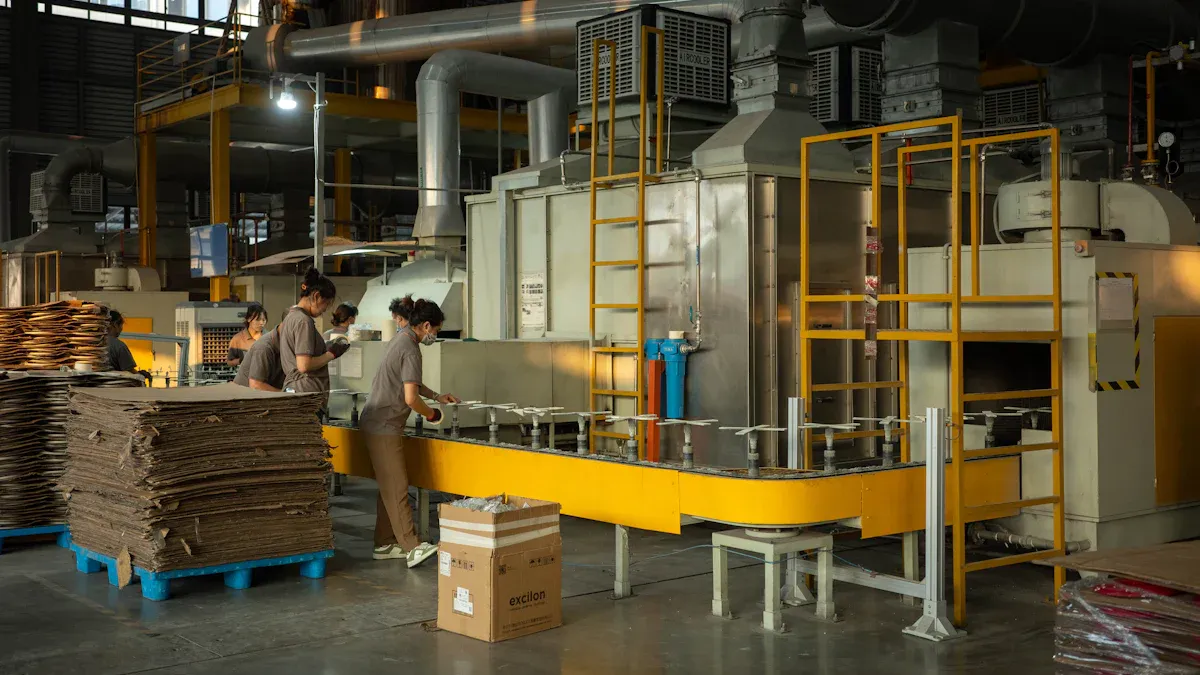
You face major supply chain disruptions when sourcing from China in 2026. The Chinese New Year causes production slowdowns, factory shutdowns, and port congestion. This event can stretch over six to eight weeks, affecting your lead times and inventory. Geopolitical changes and shipping reroutes add more risks. To manage these challenges, you should:
Conduct due diligence to check supplier stability.
Negotiate strong contracts with clear clauses.
Stagger payments for leverage.
Diversify your suppliers.
Explore nearshoring options.
Involve legal counsel early.
Monitor supplier performance.
Use insurance for extra protection.
Build strong supplier relationships.
Technology helps you track shipments and manage inventory in real time. Advanced tools give you better visibility, so you can respond quickly to disruptions.
Quality Control Challenges
You may encounter several challenges with quality control in China. Inconsistent product quality, regulatory compliance issues, and supplier reliability concerns are common. To address these, you can:
Use pre-production, during-production, and pre-shipment inspections.
Supervise container loading.
Audit factories for quality processes.
You should also use detailed checklists, hire third-party inspection companies, and track supplier performance with regular audits.
Geopolitical and Tariff Risks
You must stay alert to geopolitical risks and tariffs. The CHIPS Act and Inflation Reduction Act have changed the landscape. Tariffs on semiconductors and incentives for U.S.-made products shift trading patterns. China’s control over critical minerals adds more risks. Export controls and trade measures can disrupt your supply chain. Many buyers use technology to adapt, stockpile goods, and increase supply chain visibility. You need to monitor suppliers, adjust pricing, and plan for different scenarios to manage these costs and risks.
Best Practices for Cost Management
Supplier Relationship Building
You gain a competitive edge in manufacturing when you build strong supplier relationships. Start by setting clear performance metrics for your suppliers. Track delivery times and product quality to ensure consistency. Develop a conflict resolution process so you can address issues quickly and collaboratively. Secure your interests with robust contracts, such as OEM and NNN agreements. These steps help you protect your business and maintain compliance.
Effective supplier relationship management leads to better costs, faster speed to market, and greater supply security. Trust between you and your suppliers allows for open communication and the sharing of sensitive information. This trust is essential in today’s complex manufacturing landscape.
Benefit Type | Description |
|---|---|
Improved communication | Quick issue resolution reduces operational costs. |
Minimized costs of new contracts | Faster approvals and negotiations lower expenses. |
Improved visibility | A clear view of the supply chain reveals cost-saving opportunities. |
Increased efficiency in the supply chain | Smooth operations reduce delays and mistakes, boosting production and customer satisfaction. |
Cost Analysis Tools
You need to analyze costs carefully to manage rising manufacturing expenses. Use a Product Cost Structure Analysis to break down costs for materials, labor, and logistics. Calculate the total landed cost for each supplier. Compare quotes to identify savings and make informed decisions. These tools help you control costs and keep your manufacturing operations competitive.
Flexible Sourcing Strategies
You can manage cost volatility in manufacturing by adopting flexible sourcing strategies. Diversify your supply chain by using alternative ports like Xiamen or Qingdao to avoid congestion. Implement multimodal transport, such as sea-air or rail-truck combinations, to reduce reliance on a single route. Create logistics plans that allow for rerouting or temporary warehousing to meet customer needs. These strategies help you adapt quickly and keep your manufacturing costs under control.
Future Outlook for China Sourcing
Trends in Manufacturing Costs
You will see manufacturing costs in China continue to rise through 2026 and beyond. Tariffs on major exporters now approach 150%. Local wages have tripled, which means the old focus on cheap labor in Chinese manufacturing is fading. You must recognize that cost control is now a core capability for your organization. Traditional cost-cutting methods no longer deliver the same results. You need to leverage new technologies like AI to manage costs. The macroeconomic environment brings constant uncertainty and competition. This puts pressure on your profit margins. You cannot rely on short-term fixes. You must adopt strategic, long-term approaches to cost management in Chinese factories.
Preparing for Further Disruptions
You face ongoing uncertainty in supply chains in China. Factory closures and financial instability remain real risks. You should build relationships with multiple suppliers to reduce your vulnerability. This approach helps you secure competitive pricing and service levels. You also need to enhance cybersecurity to prevent disruptions before they escalate. Diversify your supply sources to avoid overreliance on one location. Implement redundancy in your supply chain to prevent single points of failure. Engage with new suppliers and contract manufacturers closer to your market. Regularly review your supply chains in China for vulnerabilities. Conduct scenario planning to prepare for different disruptions. Many companies now use a "China Plus One" strategy, sourcing from another country in Southeast Asia. Nearshoring also helps reduce transportation risks and costs. You must strengthen your backup plans to adapt quickly when disruptions occur.
Long-Term Sourcing Strategies
You need a resilient sourcing strategy to manage uncertainty, tariffs, and financial instability in Chinese manufacturing. Global brands like IKEA and Unilever use a hybrid production network. They keep some operations in China but expand into Vietnam, India, and Indonesia for better scalability and risk management. Japanese and South Korean firms adopted the China Plus One strategy early. They established facilities in Southeast Asia to control costs and build resilience. You should consider these models for your own business. Focus on flexibility, risk reduction, and long-term partnerships with Chinese factories and alternative suppliers. This approach will help you navigate future risks, including factory closures and changing tariffs, while keeping your supply chains in China strong.
Tip: Review your sourcing strategy every quarter. Stay alert to changes in tariffs, labor costs, and financial instability in Chinese manufacturing. Proactive planning keeps your business competitive in a world of uncertainty.
You must act now to stay competitive. Buyers should map supply chain risks, adopt a China+1 plan, and stay agile on trade policy. Partner with sourcing experts for flexibility. Proactive planning and continuous improvement help buyers manage costs and seize new opportunities in a changing market.
FAQ
What is the most effective way to manage rising costs in China?
You should diversify your supplier base and use cost analysis tools. These steps help you control expenses and reduce risk.
How can you ensure product quality when sourcing from China?
You need to schedule regular inspections and audits. Third-party inspection companies provide reliable quality checks.
Should you consider nearshoring or onshoring in 2026?
You gain supply chain resilience.
You reduce tariff exposure.
You improve delivery speed.
See Also
Essential Factors To Evaluate When Choosing A Headlamp
Achieve Perfect Brightness Control With Stepless Lantern Dimming
Enhance Performance Using An OLED Digital Power Display